Sunday, 15 November 2009

Farewell To The Knickerbocker


The Knickerbocker Yacht Club is now vacant. The clubhouse with it's hipped roof and second story deck silently looks out over Manhasset Bay. Resembling a foreclosed home, several No Trespassing signs are now taped to the large bay windows. After hearing the news that the 135 year old club had closed, I stopped by this month for one last goodbye. A utility worker making a phone call in the parking lot was all that broke the silence.


Yacht Clubs certainly do not inspire any populist imagery, but stereotypes of Buffy and Thad sailing in white slacks while maintaining a stiff upper lip are not entirely accurate. On Long Island Sound, yacht clubs tend to fall into one of three categories:

There are the exclusive clubs that do their best to hold on to the Guilded Age. These are often easy to spot with their clubhouses resembling some gold coast mansion, and their staff dressed like butlers. At the other extreme would be the working clubs whose membership often includes a high percentage of firemen, teachers, and tradesmen. These are normally do-it-yourself places where members volunteer their time along with paying dues. When the grass needs to be cut, it is a member cutting the grass, not an employee or a landscaping company. The Knickerbocker belonged to a group that is somewhere in between these two extremes. These clubs often navigate a foggy channel between controlling expenses and maintaining a certain aura of exclusiveness. Members may own an expensive boat, but they also have tuition bills and a mortgage.


For years I belonged to a working club that was about a two hour sail from Manhasset Bay. I only sailed to the Knickerbocker a handful of times, but the visits were always special to me. I would motor my old banged-up 1968 Bristol 24 into the mooring field, hail a launch, and be welcomed to the club. It did not matter that my boat cost less than a used car, while the surrounding boats were priced similar to a starter home. I may have not met the financial or social requirements to be a member of the club, but I was accepted as a guest providing I followed their rules (proper attire in the dining room, no tank tops on the premises, no spitting).I could hobnob with the doctors and architects in a mahogany trimmed bar until I turned back into a pumpkin on Monday morning. Reciprocity between clubs was the great leveling field, if only for a weekend.


When the recession hit, it was easy to question my club's chances of survival. The rundown building, the old boats, and even older membership all suggest that the best days were at least 40 years ago. The Knickerbocker did not seem to have these problems. The model ships and half hulls adorning the walls seemed to suggest an immunity to changing times. But beneath the mahogany and cherry wood paneling, the Knickerbocker was struggling with the same difficulties as every other club. Higher expenses coupled with an aging and declining membership were a disturbing trend that every club from Watch Hill to Throgs Neck faced. The prosperity of the last 25 years helped suppress the symptoms, but the current financial crisis brought them to the forefront.


At one time or another, I think we have all secretly admired yet resented people in better places. A neighbor or colleague may be someone we desperately want to be, yet we begrudge their good fortune. When bad times strike, their failure becomes some sort of "moral to the story". But I felt no sense of schadenfreude when I walked along the empty dock at the Knickerbocker this month. The club had survived two world wars, the Great Depression, and September 11, but now it was gone. I thought to myself that if it could happen to the Knickerbocker Yacht Club, then it could happen to any of us. I leaned against the peeling white handrail, looked out over the harbor, and wondered "who's next?"


Map

Saturday, 14 November 2009

Some Lame Cat Pics To Tide Us All Over

It's been a busy week and I'm trying to spend less than a half hour at the internet caf�. Plus, Angela's birthday is tomorrow and I've got to get stuff prepared for that. So, today I've only got time to put up a few pictures of our adorable, loser cats:

Speaking of Angela, she took these two pictures. They're pretty great. It appears that once we cut off Cucho's balls, his mothering instinct kicked in, and now instead of antagonizing the little kitten, he's taken to looking after his new prot�g� Chubby (the name we chose for our new cat... "Puppy Tracks" was a close second, in honor of my brother Paul's proposed name for our childhood dog, Jenny... Paul was about 4 or 5 at the time, probably).

Sometimes the killer instincts kick in, though. This hilarous picture is less painful than it looks. Chubby was just meowing here.

Anyway, have a nice weekend!

Thursday, 12 November 2009

Rainy Season Close-Out Special: Krupnik!

Here in Costa Rica the rainy season --or as the marketing geniuses at the Costa Rican Tourism Institute call it, "The Green Season,"-- is winding down, and each day brings progressively more sun and less rain. It hasn't been a very bad rainy season, thank God, at least compared to last year. Last year there was a week where it didn't stop raining, and I even missed my alarm once because it was making such a racket on the tin roof.
In any case, I know that it's getting into winter time in the U.S., and I've been meaning to share a tasty soup recipe that my friend Martha Wawro shared with me. It's called "Krupnik," and although that looks like a Slovak swear word, it's actually a Polish-style barley soup. I first had the honor of enjoying this tasty soup at one of the Wawro's delicious annual Pierogi Sundays in December, and I begged Martha for the recipe.
I'll put up the step-by-step information with some pictures, followed by the actual recipe. It's quite simple and simply delicious, so I recommend you try it at once!

First, you take the barley and rinse it. I don't know if you're like me, but if you are, then you only have a vague concept of what barley actually IS. And even after having prepared this soup a few times, I'm still not entirely sure. I guess it's some tasty type of grain. To the end, though, Angela's family was convinced that it was just some type of smaller, whiter bean.

In any case, after rinsing the barley, put it in the beef stock and bring it to a boil.

Next, wash and chop the vegetables. I think the recipe calls for fewer vegetables, but I played it a bit fast and loose since I like soup veggies. And because I just don't give a damn about your so-called cooking "rules"!

Once the barley has soaked up most of the broth, add the butter and let it cook a bit.

Finally, you add the vegetables and the rest of the broth to the pan, and cook until the vegetables are tender and tasty.

The lovely Angela enjoying the delicious final product.

Thanks, Martha, for the super soup!

Here's the official recipe for those of you at home who want to play along:

Barley Soup � Krupnik

1 c. pearl barley
2 quarts meat stock
� c. butter or margarine, cut into pieces
2 carrots, diced
2 potatoes, diced
4 oz. canned mushrooms, sliced
1 stalk celery
1 teaspoon dried parsley flakes
1 and � teaspoons salt
� teaspoon pepper

1) Combine barley with 1 cup of meat stock in a large saucepan. Bring to a boil; reduce heat and simmer until all stock is absorbed. Add butter piece by piece, stirring.

2) Boil vegetables in remaining stock until crisp-tender. Then add barley, parsley, salt, and pepper. Cook until barley is tender.

Martha's Note: Pierogi Sunday requires much more pepper to taste.


Wednesday, 11 November 2009

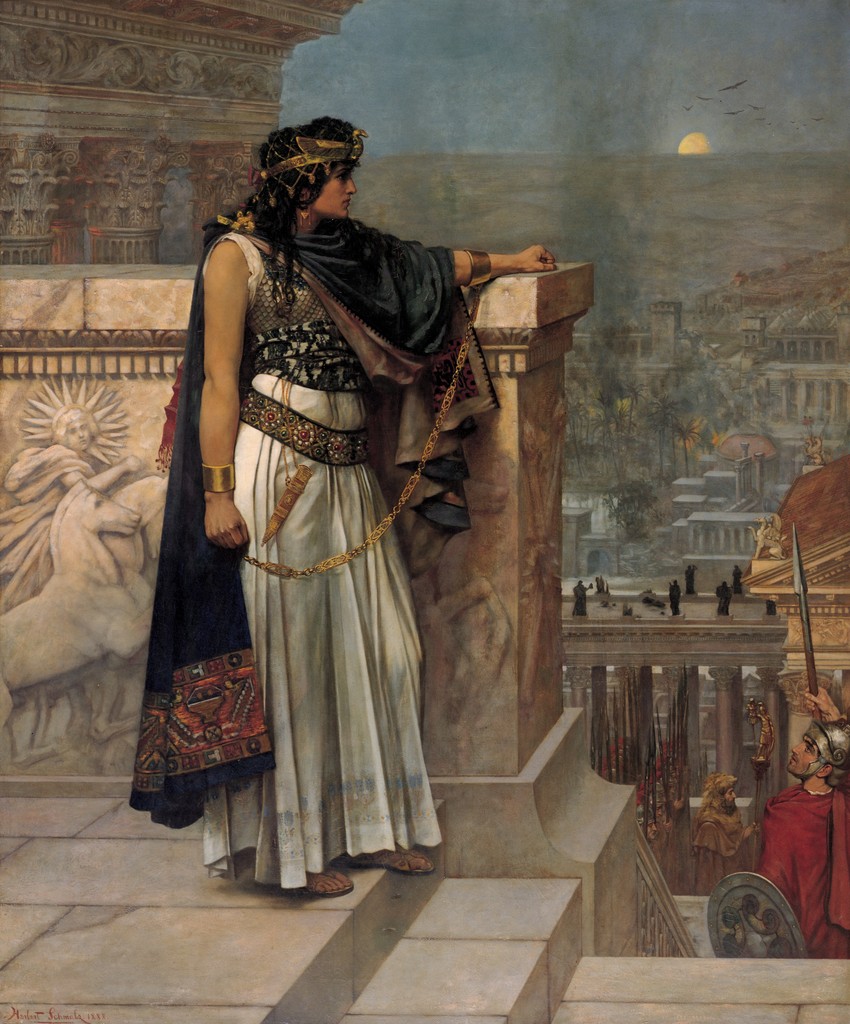
Glory Of Palmira

???? ?????? ???????
???? ?????? ???????� ?? ??????.??????

When I was younger, I heard many times Leningrad (S.Petersburg today) was called Nothern Palmira. Sincerely I've never thought about these words. Yesterday I could listen to it's story, of Palmira, told by Valerio Massimo Manfredi, historian and very successful writer (probably you've read his book "The Last Legion" -my translation of the title- and I know that they told about a movie)
There were reconstruction of the city in the documentary. It was a city of incredible beauty and very very big. Enormous. Manfredi said, there were different millions of residents there! And it was so antient that even the Bible tells about it!
In the times when Roman Empire had great problems, there was a young and beautiful queen Zenobia in Palmyra that was so courageous to rebell against Romans. She was not very happy in her ribellion. One of the Roman Emperors (the name originaly means "head of the military troups"), Aurelian, captured her and brought in Rome...

I thought, he, Aurelian, loved Zenobia, so as Giulius Cesare loved Cleopatra, because Manfredi said, Aurelius had something special in mind for her...
...but the truth is absolutely not romantic. He wanted her to walk in chains (golden chains) through the streets of Rome for his triumphal return home.
The plant on the photo has the name of queen Zenobia. It is Zenobia pulverulenta (Honeycup) and the residents of Carolina and Virginia (US) maybe know it.
So, if you plan to go in Syria, don't forget to visit Palmira and remember this rebelle woman...

Tuesday, 10 November 2009

Glen Island Bridge


Glen Island was originally a private resort created in the late 19th century, that consisted of several islands linked by causeways and footbridges. To reach the islands, one needed to arrive by excursion boat, or take a small ferry from New Rochelle. When Westchester County purchased the land in the 1920's, the islands were connected with fill to create one large island. The drawbridge shown here, was also constructed to connect the park to the mainland. The stonework and streetlamps make this an attractive bridge. Today, the 105 acre Glen Island is the second most visited county park in Westchester.

*

Westchester.com: Glen Island Park

Monday, 9 November 2009

Debugging Man and Machine

For a period of about two months, my computer was having trouble with its anti-virus program. Apparently, the utility it used to update virus definitions got --wait for it-- a virus. As you may know, I hardly ever connect my computer to the internet anyhow, but it was still annoying. That dilemma, along with a new hare-brained scheme to charge for parking in Palmares, has resulted in me being a bit M.I.A. on the blogging scene of late. In the end, the virus problem got resolved after a couple weeks of back-and-forth emails to Customer Service. However, another potential problem remained.

When I was driving back from an in-service day in San Jose a few weeks ago, some of my coworkers were talking about traveling sicknesses, and the topic turned to "de-parasiting" pills. Evidently, many people here routinely take a pill every now and then to get rid of parasites. "What," they asked me, "You've never taken one of those pills before?" Well, I'd not. Evidently, my trip to Nicaragua a few years ago may have left me with more souvenirs that I had imagined. Plus, I'd been waking up with teeth and jaw-aches, and apparently grinding and clenching teeth is also a common result of parasites.

So, Angela and I bought some pills at the pharmacy and took them, crossing our fingers and hoping for luck. Next up, we have to take Chubby (our new grey cat) to the vet to get de-wormed also.

Ah, Costa Rica. It'll infect you with love. And other stuff.

Sailing With Cancer


I don't remember much about the first time Monica came sailing with me. I do know it was about a decade ago aboard my old banged-up Bristol 24 I kept in City Island. She was no sailor or boater, but she carried a natural affinity for the water, and felt right at home. There were no mishaps or complaints that day from myself or her; perhaps that is why I do not recall much about it.


In 2006, Monica was diagnosed with bone cancer. It has been a roller coaster ride ever since: months of relatively normal life interrupted by periods where it did not seem she would survive another week or two. It is the latter that we are going through right now.
I do not want to turn this into a political post, but those of you who think you are insured, need to think again. Fighting with the insurance companies has been just as large a battle as the sickness itself. We may have the greatest medical treatment in the world in this country, but it is a private beach, reserved for club members and waterfront residents only.

Monica worked at a hospital in White Plains for twenty years; she thought she had great insurance. Most of the cable-TV jockeys seem to frame the argument around the insured versus the uninsured. There are large numbers of insured Americans who are not as insured as they think they are.
Long Island Sound has been a respite from all this morbidity and corporate nonsense, providing us with an outlet that is sometimes the greatest therapy.

 And most of all, she has been a good sport.

  " Hey Mon, instead of going to that swanky marina with the pool and tiki bar, would it be alright if we anchored near Bridgeport so I can photograph the oyster boats returning to port?"


photos: Shelter Island Ferry (top)
Stonington
Long Passage to Block Island (bottom)


BoatingLocal: CT Group Gets Cancer Patients Sailing